Why Whole Home Window Replacement Makes Sense for DFW Homeowners
If you have lived in the DFW metroplex for more than a few years, you know the weather here tests everything on your house. The summer heat alone puts constant stress on windows, and the sudden hailstorms and high winds that roll through the area can damage frames and seals in ways you might not notice at first. When one window starts to fog or a sash sticks, it is tempting to just replace that single unit and move on. But there is a strong case for tackling a whole home window replacement instead of patching things one at a time.
I have worked on enough older homes in this region to see the same pattern: a homeowner replaces a failed window here, a cracked pane there, and ends up with a mix of models, ages, and performance levels across the house. That approach can leave you with uneven energy bills and a mismatched look. A coordinated whole home window replacement gives you consistent performance, a uniform appearance, and often a better return on your investment. It is one of those projects that feels big at the start but pays off every month in lower cooling costs and fewer drafts.
What a Whole Home Window Replacement Actually Involves
Whole home window replacement means removing every existing window unit in the house and installing new ones at the same time. That includes the frames, the sashes, the glass, and all the hardware. The work is typically done over a few days by a crew that handles the removal, installation, and cleanup. For a typical single-family home, that might mean ten to twenty openings, depending on the floor plan.
The process starts with a free estimate, where a contractor measures each opening and discusses your options for frame materials, glass types, and window styles. Most homeowners in the DFW area lean toward vinyl windows or fiberglass windows because both handle thermal expansion well and resist the humidity that comes with our climate. Vinyl windows are the more budget-friendly choice, while fiberglass windows offer greater structural rigidity and a longer service life in direct sun. Both materials can be paired with energy-efficient glass and Low-E coating to reduce heat gain in the summer and keep warmth inside during the cooler months.

Window Styles and Configurations
You also get to choose the operating style. Casement windows are popular in newer construction because they seal tightly and offer good ventilation control. Double-hung windows are common in older homes and are easier to clean from inside. For a whole home replacement, you can mix styles if it makes sense for different rooms, but keeping a consistent style across the front elevation usually looks best. Custom windows are available if your openings are non-standard sizes or if you want a specific look that stock sizes cannot match.
Energy Performance and Comfort
One of the strongest arguments for doing all the windows at once is the energy savings. Old single-pane windows are essentially holes in your building envelope. Even double-pane windows from twenty years ago perform poorly compared to modern double-pane windows with Low-E coating and argon gas fill. When you replace every window in the house with modern units, the difference is immediate. Rooms that used to feel stuffy in the afternoon stay cooler. The HVAC system runs less, which shows up on your electric bill.
For homeowners who want maximum insulation, triple-pane windows are an option. They cost more and are heavier, so the window frames need to be sturdy enough to support them. But in a whole home window replacement, the added cost is spread across the whole house, and the acoustic insulation alone can be worth it if you live near a busy road. The DFW metroplex has plenty of neighborhoods where traffic noise is a real issue, and triple-pane windows help a lot.
Dealing with Foggy Glass and Failed Seals
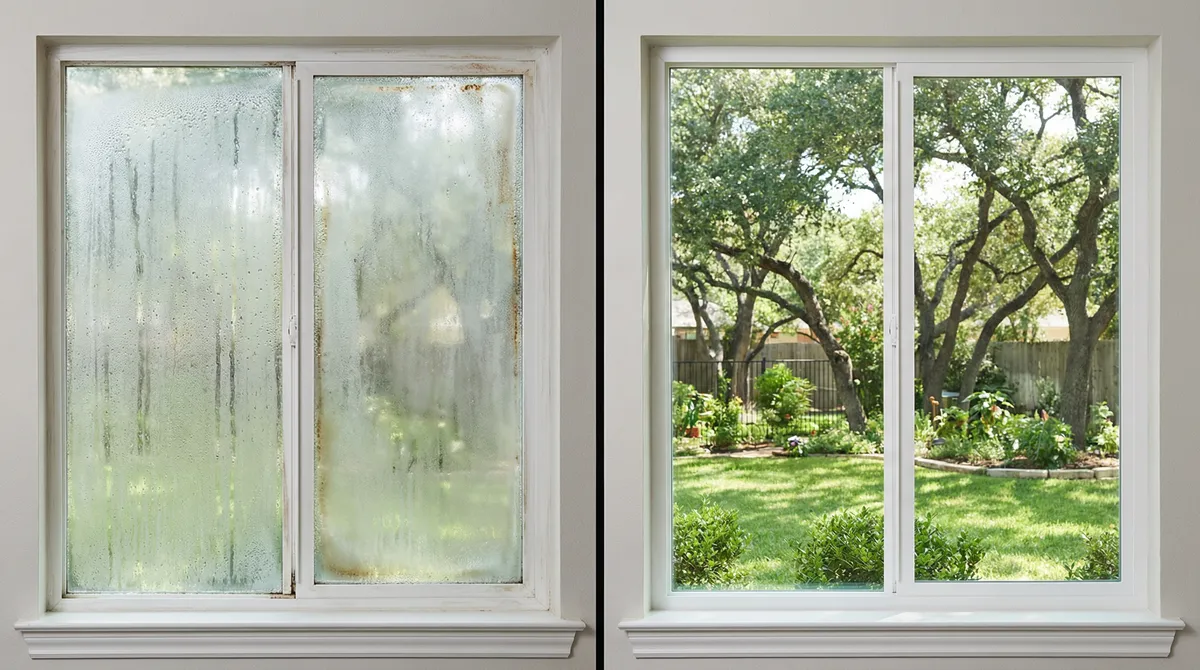
If you have been living with foggy glass repair requests on your to-do list, you are not alone. Foggy glass happens when the seal on a double-pane window fails and moisture gets between the panes. It looks bad and it reduces the insulating value. Repairing individual units can solve the visual issue, but if the rest of your windows are getting old, the next failure is just a matter of time. A whole home window replacement eliminates that cycle. Every window gets a fresh seal with a solid window warranty that covers the glass and the frame for a set number of years. That peace of mind is hard to put a dollar figure on.
For commercial properties, the same logic applies. Commercial glass services often handle large-scale replacements for office buildings and retail spaces, where consistent performance and a professional appearance matter. The scale is bigger, but the principles are the same: matching units, uniform installation, and a single warranty covering everything.
Cost and Budget Considerations
Window replacement cost varies widely based on the number of windows, the materials you choose, and the complexity of the installation. Vinyl windows are usually the most affordable, while fiberglass windows and custom windows sit at a higher price point. Impact-resistant glass is another option worth considering if you live in an area prone to hail or break-ins. It costs more but adds durability and security.
When you compare the cost of a whole home window replacement to replacing windows one at a time over several years, the single-project approach often comes out ahead. You pay for the materials and labor once. You get one warranty. You avoid the inconvenience of having work done repeatedly. And you get the energy savings from day one instead of spreading them out over a decade.
Most reputable contractors offer a free estimate that includes a written quote with a breakdown of materials and labor. That lets you compare options without any pressure. It is worth getting estimates from at least two companies so you can see how they price the same scope of work. Pay attention to the window warranty details. Some manufacturers offer a lifetime warranty on the glass and a separate warranty on the frame and hardware. A good warranty protects your investment and covers defects that might show up years later.
Installation Matters as Much as the Windows
You can buy the best windows on the market, but if the professional installation is sloppy, you will have air leaks, water intrusion, and premature seal failure. A proper installation includes removing the old frame, checking the rough opening for rot or damage, flashing the sill, insulating the gaps, and sealing the flange. The crew should also test each window after installation to make sure it opens, closes, and locks properly.
For homeowners in the DFW metroplex, finding a contractor who understands local building codes and climate conditions makes a difference. The heat and humidity here require specific sealants and flashing techniques that might not be standard in cooler regions. Ask about their experience with whole home window replacement specifically, not just individual window swaps. A crew that does this type of work regularly will have the process streamlined and will know how to handle unexpected issues like out-of-square openings or rotted framing.
Window Frame Materials and Longevity
Choosing the right window frame materials is a decision that affects maintenance and lifespan. Vinyl windows are low maintenance and resist moisture well, but they can warp in extreme heat if they are not reinforced. Fiberglass windows are more stable and hold paint better if you ever want to change the color. Both are good options, but fiberglass tends to have a higher upfront cost. Wood frames are still available from some manufacturers, but they require regular painting and are more susceptible to rot in humid climates. For a whole home replacement, most homeowners in this area stick with vinyl or fiberglass for the balance of cost and durability.
Some brands that started in other regions have become common here. For example, Anaheim window brands are known in the industry for certain product lines, but local contractors usually recommend brands that have strong distributor support in Texas so replacement parts and warranty service are easy to get.

Making the Decision
If your current windows are more than fifteen years old, you have a mix of styles and ages, or you are tired of repairing foggy glass and drafty frames, a whole home window replacement is worth serious consideration. It is a significant project, but it changes how your house feels every single day. The energy savings, the quiet, the consistent look, and the warranty coverage all add up to a better living experience.
Start by getting a free estimate from a company that specializes in whole home window replacement and has a track record in the DFW area. Ask about the brands they carry, the warranty terms, and the timeline for the work. A good contractor will walk you through the options without pushing you into a decision. Take your time, compare the numbers, and think about how long you plan to stay in the home. If that number is more than a few years, the investment usually pays for itself in comfort and resale value.